
FIT
Measures how closely the lead matches the business's ideal customer profile, service compatibility and operational requirements.
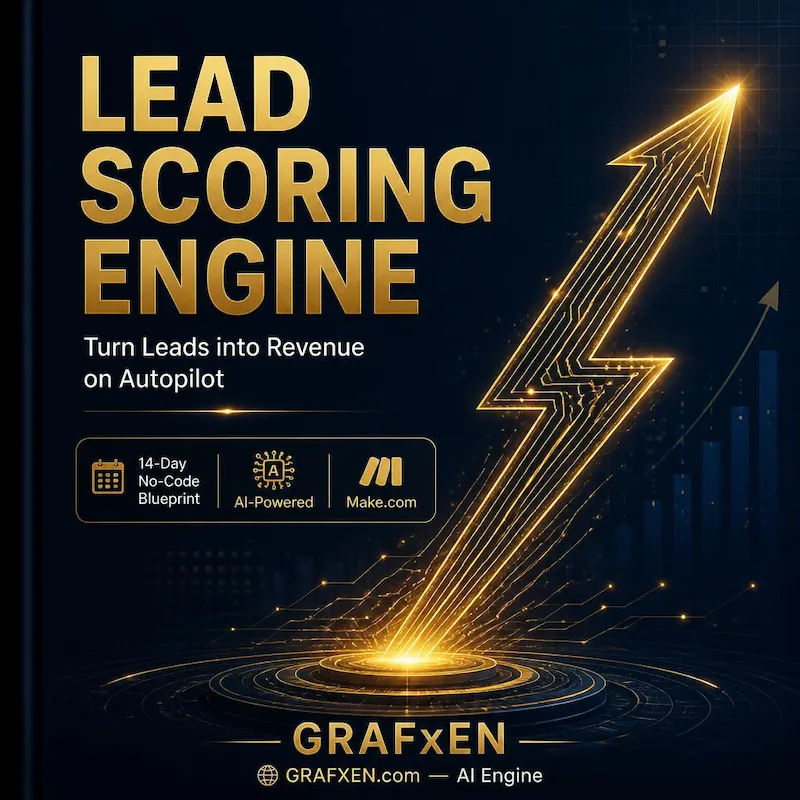
Not every enquiry represents the same level of business opportunity. The Lead Scoring Engine 2027 is a practical guide to designing a structured lead qualification system that evaluates incoming enquiries using defined business criteria, consistent scoring rules and automated workflows.
Learn how Make.com can connect lead capture, data validation, OpenAI-powered information analysis and CRM processes. The guide explains how AI can interpret information from enquiries while transparent scoring rules calculate the numerical result and help organize follow-up priorities.
Explore the framework, understand the workflow architecture and use the implementation guidance to plan a lead qualification process suited to your own business.
Select your preferred platform to view the available digital edition and complete your purchase. Prices and purchasing conditions are confirmed by each store.
Prices, availability, payment methods and purchasing conditions are determined by the selected external store.Businesses receive enquiries through websites, forms, campaigns and other communication channels. Without a consistent method of qualification, teams can struggle to distinguish serious opportunities from enquiries that need more information or a different type of follow-up.
A useful lead scoring system combines business criteria, reliable information, transparent rules and appropriate human oversight. AI can help interpret unstructured enquiry text and extract relevant evidence. Deterministic scoring rules then calculate the numerical score, making the process easier to understand, review and maintain.
The framework evaluates three positive dimensions: Fit, Intent and Engagement. Defined penalties can reduce the result when specific negative evidence is confirmed. The model is designed to make qualification criteria visible rather than relying on an unexplained AI-generated number.
Measures how closely the lead matches the business's ideal customer profile, service compatibility and operational requirements.
Evaluates evidence of buying interest, such as a request for a proposal, consultation, demonstration or a clearly expressed business problem.
Considers relevant responses, attended consultations, supplied project information and meaningful next steps completed by the lead.
Positive points are calculated from Fit, Intent and Engagement. Defined penalties can reduce the result, with the final score kept within the 0–100 range. The model also preserves evidence and allows uncertain cases to be reviewed by a person.
High-priority follow-up based on the defined scoring rules.
Further qualification or a relevant follow-up may be needed.
Lower current priority under the scoring framework.
A low-confidence result or material contradiction can trigger a Review status regardless of the numerical score. Confidence is treated separately from the score and is not presented as a calibrated probability.
The 26-chapter guide takes you from the fundamentals of lead qualification through workflow design, automation, deployment planning and ongoing system maintenance.
Understand the changing role of lead qualification, the lead lifecycle, Ideal Customer Profile design and the principles behind a reliable scoring model.
Strategy & QualificationExplore the technology stack, Make.com architecture, lead capture, data validation, scoring logic and OpenAI structured analysis.
Architecture & ScoringLearn about CRM integration, notifications, follow-up, AI-assisted enrichment, reporting, error handling and workflow recovery.
Integration & OperationsWork through a 14-day implementation planning framework, realistic testing, calibration, GDPR considerations, security, cost planning and scaling.
Testing & ImplementationExplore the scoring framework, OpenAI prompt and JSON schema, Make.com scenario build sheets, CRM field mapping, troubleshooting and maintenance checklists.
Practical Reference MaterialBring the concepts together and understand how structured lead information can support more consistent qualification and informed follow-up decisions.
Conclusion & ApplicationThe objective is not to let an AI model make unexplained business decisions. The objective is to create a transparent process in which information is collected, interpreted, evaluated against defined criteria and routed appropriately. AI supports the interpretation of enquiry information; deterministic rules calculate the score; and people remain responsible for reviewing uncertain or consequential cases.
The guide explains how separate components can work together to create a structured qualification workflow. The exact configuration depends on your tools, CRM, data and business requirements.
A lead scoring workflow is not a single AI tool. It is a coordinated process involving data sources, automation, structured analysis and a reliable business record.
Connects applications, receives lead data, coordinates workflow steps and manages routing between the different parts of the process.
Automation PlatformHelps interpret unstructured enquiry information and return relevant evidence in a structured format. It does not replace the deterministic scoring rules.
AI Information ProcessingStores lead records, qualification results, communication history and follow-up status according to the configured CRM integration.
Customer Relationship ManagementSuitable storage can support workflow state, duplicate checks and operational tracking. Lightweight storage is not a replacement for a full CRM.
State & DeduplicationThe guide includes a structured 14-day planning framework to help organize the work from initial requirements to testing and launch preparation. The schedule is a planning guide, not a guarantee that every system will be deployed within 14 days.
Establish the Ideal Customer Profile, qualification criteria, data sources and business objectives.
Map the Make.com architecture, define data fields and plan the AI analysis and scoring stages.
Configure the relevant automation modules, structured analysis, scoring rules and CRM connections.
Run realistic test cases, review the results, correct errors and establish monitoring and maintenance routines.
The final part of the guide brings together reference material designed to support planning, configuration, testing and maintenance.
These are instructional build sheets and implementation references. They are not represented as a ready-to-import Make.com scenario bundle.
Lead qualification involves personal and business information. The guide addresses practical considerations around GDPR, data minimisation, access restrictions, retention, security and human oversight. An enquiry does not automatically mean that a person has consented to marketing. Opt-outs and communication preferences must be respected independently of a lead's numerical score. Appropriate legal advice may be needed for a specific implementation.
A practical digital guide organized to help you understand the system, plan its components and work through an implementation process.
Five parts covering the foundation, engine architecture, automation, deployment and professional toolkit.
Defined Fit, Intent and Engagement criteria, penalties, priority thresholds and review considerations.
Architecture explanations, workflow stages, scenario build sheets and integration planning.
Structured analysis concepts, prompt design and JSON schema reference material.
Field mapping, routing, notifications, reporting and qualification status management.
Implementation planning, troubleshooting, calibration, security considerations and launch checklists.
This product is a practical digital guide and implementation blueprint. It provides explanations, frameworks, examples, prompts, schemas and planning material. It is not a preconfigured CRM, a ready-to-import Make.com scenario, an installed automation system or a subscription to third-party services. Make.com, OpenAI API and CRM accounts, where required, must be obtained and configured separately.
Explore related guides covering AI automation, digital business opportunities, business growth and content creation.
It is a practical digital guide explaining how to design an AI-assisted lead qualification workflow using Make.com, OpenAI structured analysis and defined scoring rules.
It is intended for entrepreneurs, freelancers, business owners and automation enthusiasts who want to understand how structured lead qualification can be designed and connected to business workflows.
The guide focuses on automation architecture and practical implementation concepts. Make.com offers visual workflow configuration, but building a working system still requires setup, testing and an understanding of the connected services.
AI is used to interpret enquiry information and extract structured evidence. The numerical score is calculated separately by deterministic rules based on the defined scoring framework. This separation makes the result more transparent and easier to review.
No. The guide contains architecture explanations, scenario build sheets and implementation guidance. It is not a preconfigured Make.com JSON export or an installed workflow.
If you choose to implement the described workflow using these services, you will need the appropriate accounts and configurations. OpenAI API billing is separate from a ChatGPT subscription. Provider pricing and plan limits can change.
The guide explains CRM integration concepts and field mapping. Actual compatibility depends on your CRM, available integrations, API access and configuration.
No. It is an implementation planning framework. Actual completion time depends on the complexity of your workflow, available data, integrations, account access, testing requirements and technical experience.
No. The guide provides a framework and practical implementation guidance. Business results depend on your offer, market, lead sources, execution, costs and many other factors.
You can view the available offer through Payhip or Gumroad. Use the store links in the product section above to review the current price and purchasing conditions.
Explore a practical framework for lead qualification, AI-assisted information analysis and automated business workflows. Understand the system, plan your implementation and build around the needs of your own business.
EXPLORE THE GUIDE ON PAYHIPYou don't need capital to scale with GRAFXEN. Join our elite affiliate network today, promote high-end digital solutions, and earn industry-leading commissions.
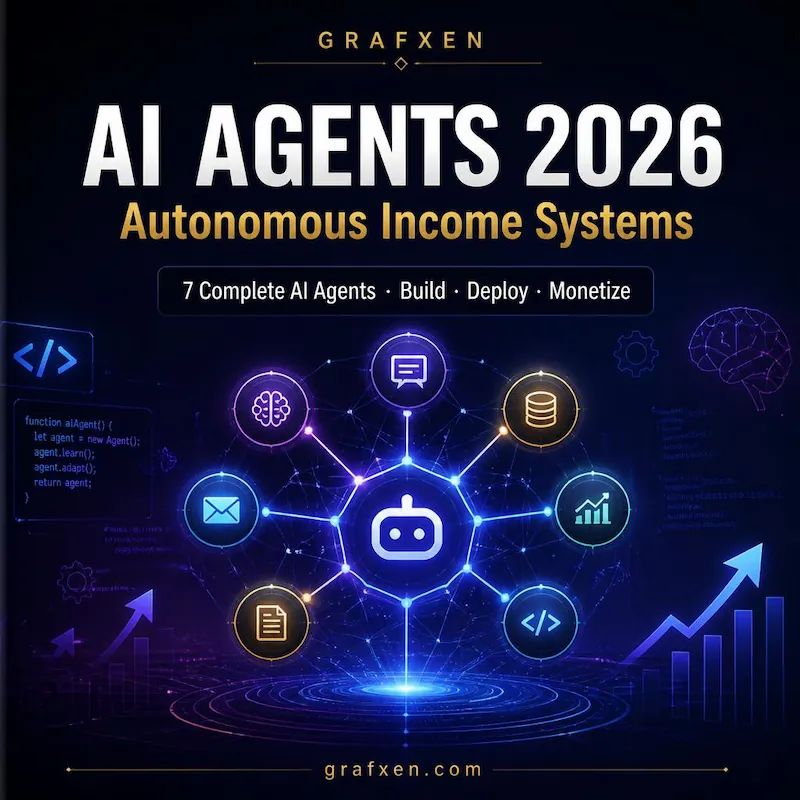 AI Agents 2026 Blueprint
EN102 · Explore product →
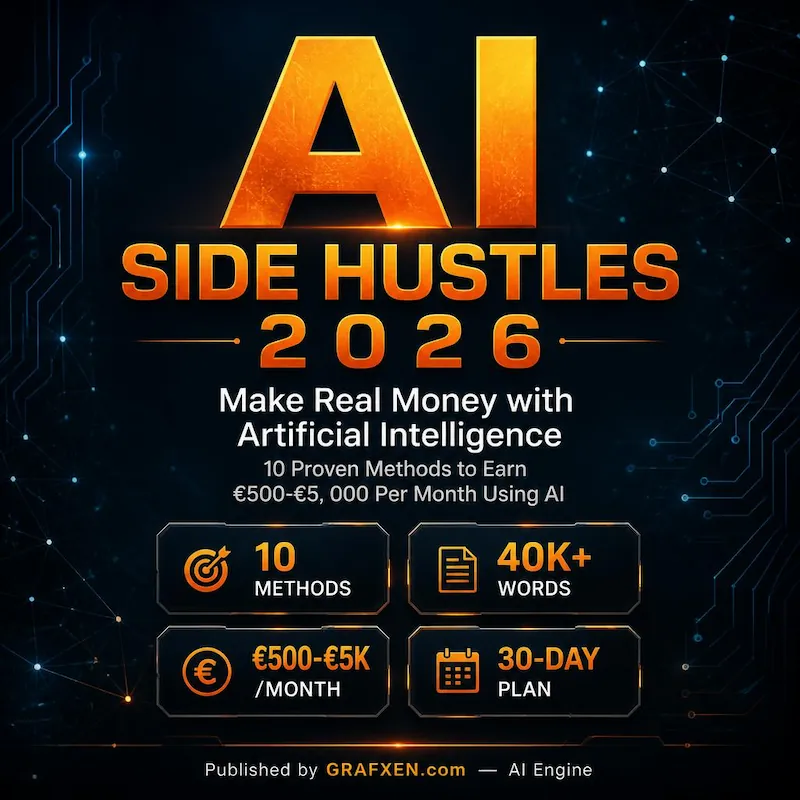 AI Side Hustles 2026
EN103 · Explore product →
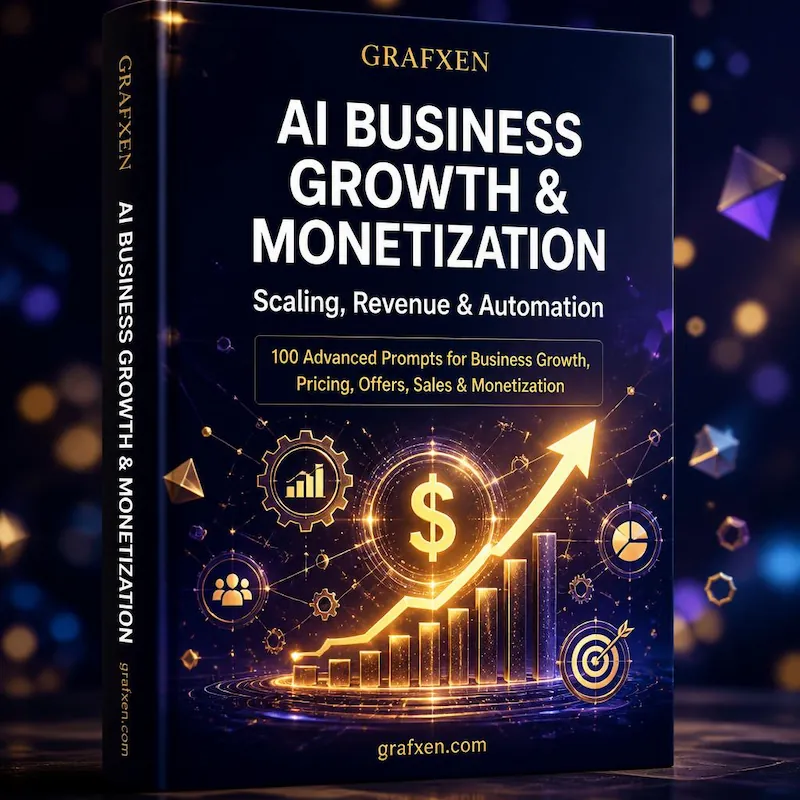 AI Business Growth
EN104 · Explore product →
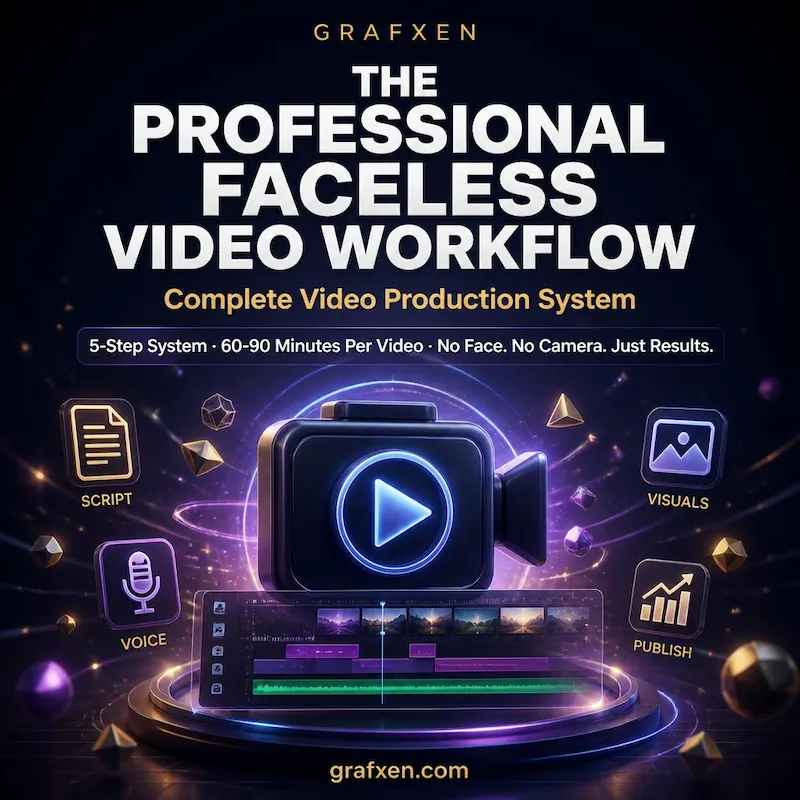 The Professional Faceless Video Workflow
EN105 · Explore product →